If a regular gym evokes chaos, random exercise choices, and the question "Am I really doing this right?", this guide to Nano Gym training is for you. It's a training model that combines strength and functionality with highly specific technological support—to make movement more conscious, safer, and simply more effective.
What exactly is Nano Gym training?
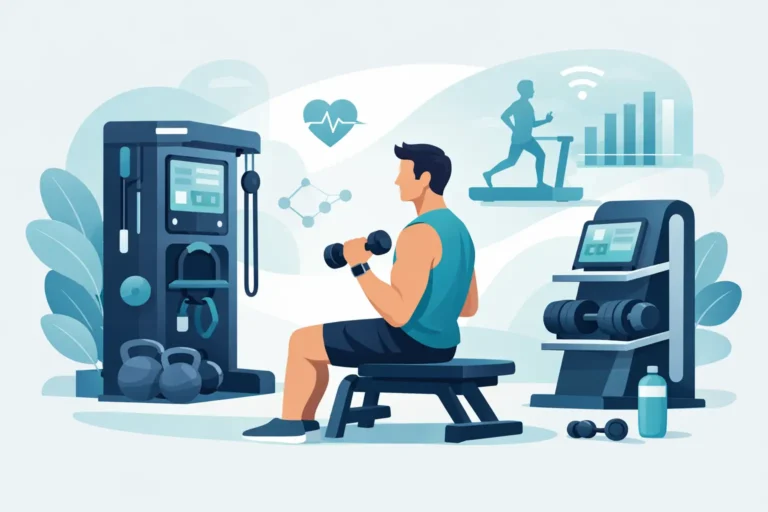
Nano Gym is strength and functional training conducted with assistance screens showing exercises, tempo, scope of work, and subsequent stages of the session. However, technology isn't meant to replace the trainer. Its role is different – it organizes the training, facilitates movement understanding, and provides clear guidance, allowing the trainer to focus on what's most important: technique, body positioning correction, and load adjustments.
For a beginner, this is a huge relief. There's no need to guess what to do next or stress about something going wrong. For a more advanced person, the benefits are just as real – they can train more precisely, maintain a structured unit, and better monitor progress.
This training typically relies on movements that are useful outside the gym: squats, pushes, pulls, rotation, stabilization, and full-body work. This means the results don't end with "calories burned." They also focus on improved posture, a stronger core, greater agility, and reduced stress in everyday life.
Who is this Nano Gym workout guide for?
The short answer is: for a great many people. Nano Gym is perfect for returning to exercise after a break, as well as for those who want to exercise regularly without the hustle and bustle of a crowded gym.
This is particularly well-suited to those who want to improve their posture, strengthen their core, and simultaneously improve their movement quality. If you work at a desk, have tense shoulders, a weakened core, or feel that traditional strength training is too chaotic for you, this format may be a very good choice.
However, it's worth adding "it depends." If your sole goal is to maximize your typical bodybuilding results or train for a very specific sport, you need an even more specialized plan. Nano Gym excels in areas where healthy strength, fitness, physique aesthetics, and safety are key.
What does the first session look like?
Your first workout usually doesn't involve throwing you straight into the deep end. And that's a good thing. Initially, it's all about assessing your level, mobility, stability, and movement patterns. The trainer checks how you perform basic movements and selects exercise variations that are challenging, but not random.
Then you learn the workflow itself. Screens show the next exercise, the number of repetitions or time, and the execution method. This is very practical because you don't have to constantly break away from your workout to wonder what to do next. Everything has a rhythm and order.
A well-conducted first session gives you two things: first, a sense of security. Second, the clarity that training can be both specific and comfortable.
What does technology in Nano Gym offer?
Many people hear about screens and think they're just a modern accessory. In practice, technology makes a difference where errors most often occur: in repetition, concentration, and movement comprehension.
When an exercise is demonstrated clearly and in the correct order, it's easier to maintain a steady pace and proper technique. Training becomes more predictable and therefore less stressful. This is especially important for those who don't feel confident with free weights or they don't have much experience.
At the same time, technology doesn't eliminate the need for thinking. You still need to learn to feel your own body, control your breathing, and consciously align your spine and pelvis. A good system helps, but the best results come when this support is paired with the guidance of a trainer.
How to train to really see results
The most common mistake isn't motivation. It's randomness. One week, three workouts, then ten days off, then too much weight and a strained back. Nano Gym works best when you establish consistency.
For most people, two or three workouts a week are a good start. This is enough to improve strength, muscle tone, conditioning, and coordination, while also giving your body time to recover. If you're just starting out, you don't need to exercise every day. More often than not, better is worse if your technique starts to break down.
Progress also matters. It's not about lifting a lot more each week. Sometimes progress means more precise movement, a more stable core, better range of motion, or a more relaxed pace. Such progress is less dramatic than adding weight, but it can be more important for your health and physique.
What results can you expect?
The first changes often appear faster than you think, but not always where you expect them. Initially, many people notice better body control, increased energy, and less tension in their back and shoulders. This is a good sign because it means the body is starting to function more efficiently.
Over time, strength, body tone, and fitness improve. Regular Nano Gym training can help slim your body, strengthen your glutes, legs, back, and abs, without sacrificing functional movement. This is a significant difference. The goal isn't just to "look better," but also to move better.
The rate of results depends on several factors: training frequency, sleep quality, nutrition, stress level, and starting point. Someone who has been active for years will notice changes differently than someone who has been active for years. Therefore, it's worth looking beyond just the scale.
The most common mistakes at the start
The first mistake is starting out too ambitiously. When you return to exercise, your body needs to adapt. If you immediately start with high loads, you risk overloading and becoming discouraged.
The second mistake is focusing solely on numbers. Of course, weight matters, but if your knees give out, your shoulders sink into your ears, and your breathing is haphazard, the result is no longer a success. In functional training, movement quality isn't an afterthought. It's fundamental.
The third problem is a lack of patience. Your body won't change after three sessions, but it quickly learns whether you're working smarter. It's better to train consistently for three months than intensely for two weeks.
Nano Gym and a classic gym
This isn't a debate about what's "better" for everyone. It's more about tailoring the environment to your needs. A traditional gym offers a lot of freedom and a wide selection of equipment, but it also requires independence, knowledge, and a tolerance for chaos.
Nano Gym is more structured. It provides a clear structure, visual guidance, and a greater sense of control over what you're doing. For many people, this is what drives regularity. It's easier to come to a workout when you don't have to plan everything from scratch.
In an intimate club like Velvet Gym, there's another advantage: the atmosphere. Less randomness, more focus on technique, and greater psychological comfort. For those who dislike anonymous spaces, this has real significance.
How to prepare for a Nano Gym workout
You don't need any athletic experience or perfect form. All you need is comfortable clothing, a bottle of water, and a willingness to work on your movement. It's a good idea to eat a light meal 1.5-2 hours before your workout, and if you're exercising in the morning, a small snack and hydration are also helpful.
Arrive a few minutes early to ease into your session. Rushing doesn't help with concentration. If you have a history of injuries, back pain, or mobility limitations, please mention this before the start. This isn't a detail, but important information that allows you to choose a safer exercise option.
When is it worth combining Nano Gym with other forms of exercise?
Nano Gym provides a great strength and functional foundation, but it doesn't have to be the only element of the plan. It works very well for many people. combining it with Pilates, walking, cycling, or gentle mobilization. This builds strength while also improving flexibility, breathing, and recovery.
This is a particularly good solution if you're looking for a healthy spine, better posture, and a slim, fit physique. Intensity matters, but balance is equally crucial. The body loves challenges, but it loves thoughtfully selected stimuli even more.
The best workout isn't the most fashionable or the most grueling. It's the one you want to come back to, the one that makes you feel stronger, more confident, and better in your own body.