
The first repetition of a squat may look good. Only the second, eighth, and twelfth repetitions reveal whether the body is actually working steadily, or whether it's starting to take over with its back, knees, or momentum. That's why effects of movement control training goes beyond the number of calories burned. It's a workout that teaches the body to move more confidently, more powerfully, and without unnecessary strain.
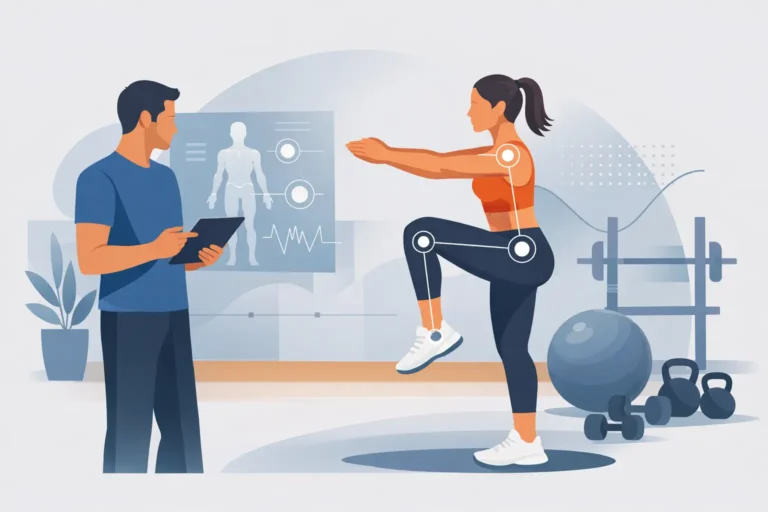
At Nano Gym motion imaging technology It helps you see the exercise, maintain momentum, and avoid losing technique during the set. The screen guides you through the exercise, and the trainer can focus on what no manual can: body positioning, breathing, individual limitations, and properly selected load. This makes training specific, but not haphazard.
Why does motion control change the quality of training?
In traditional training, it's easy to focus solely on the goal: lift weight, perform more reps, finish faster. This sometimes works, especially for experienced individuals with good body awareness. However, for most exercisers, simply performing a movement isn't proof that it was performed correctly.
Movement control means consciously guiding your body within a specific range and pace. In a squat, it's not just about standing up, but also about whether your knees remain stable, your pelvis doesn't collapse, and your core is properly braced. In a pull or press, the shoulder blades, neck position, and breathing become crucial. These small details determine which muscles actually do the work.
This approach isn't about overanalyzing each step. It's about creating a repeatable pattern that becomes natural over time. Once the body knows how to maintain the position, it's safer to increase the load, pace, or difficulty of the exercise.
The Effects of Movement Control Training: What to Expect?
The most noticeable change often doesn't start with the mirror. It manifests itself in everyday life: it's easier to climb stairs, get up from a chair, carry groceries, or sit at a computer for long periods without feeling a pull in the back. The body stops reacting tensely to any major exertion because it has more strength and distributes it better through movement.
Better technique and greater confidence
Beginners often worry that they don't know what they're doing at the gym. This is understandable – exercises have a specific order, setup, and rhythm, and accidentally copying the movements of others doesn't provide a sense of security. Visually guiding your workout organizes the entire process. You know what exercise you're doing, how long each set lasts, and what to focus on.
Over time, your body confidence also grows. Not because every movement becomes perfect, but because you recognize when it's time to slow down, adjust your positioning, or choose a lighter option. This is a very practical skill, even outside the club.
Stronger muscles without building compensation
Muscles strengthen when they receive the appropriate stimulus. However, if other areas take over the primary work during the exercise, the effect may be weaker than the effort would suggest. For example, when exercising the glutes, it's easy to primarily strain the lumbar spine. In upper body movements, the neck can take on the stress.
Controlled pacing and mindful positioning help direct the work where it needs to go. It's not about isolating the body from life, but building strength in a way that supports squats, marches, lifts, twists, and maintaining a stable position. The result is fitness you can actually feel.
A slimmer figure and better posture
Movement-controlled training can support physique change because it develops muscle, improves daily activity, and allows you to train regularly without constantly overloading your body. However, it's not worth promising that technique alone will change everything in a few weeks. Nutrition, sleep, stress, daily exercise levels, and consistency also contribute to fat loss.
What many people notice first is a change in the way their body aligns. A more stable core, more active glutes, a stronger back, and a more open chest can improve posture. The silhouette then appears more toned, even before changing clothing sizes.
Less tension, more support for the spine
Back pain doesn't always stem from a single cause, so exercise isn't a substitute for consulting a doctor or physiotherapist, especially after an injury, with radiating pain, or severe symptoms. However, in many everyday cases, the problem is a combination of prolonged sitting, limited movement, and poor trunk control.
A well-executed workout strengthens the muscles supporting the spine, teaches stabilization, and restores mobility where the body has become stiff. A reasonable dosage is crucial. Someone who hasn't exercised in months doesn't need to start with maximum load. They need a plan that will help them rebuild confidence in their own movement.
What exactly is monitored during training?
Control isn't just about one thing. It's a combination of positioning, range of motion, breathing, tempo, and proper load. Sometimes the biggest change comes from lowering the weight more slowly. Other times, shortening the range to maintain stability is key. For some people, learning to contract the abdominals is key, while for others, engaging the shoulder blades or breathing calmly without lifting the shoulders.
Technology is a support, not an end in itself. The screen reminds you of the exercise structure and helps you maintain your rhythm, but the trainer observes your reactions. They can notice fatigue, uneven side movements, limited mobility, or when it's time to increase the challenge. This combination offers more than a completely solo workout and more than general instructions for a large group.
When do real effects appear?
The first signs can come quickly: improved post-workout well-being, less stiffness after work, and greater postural awareness. Noticeable strength gains usually require several weeks of regular training. Physique changes take longer and depend on your starting point, training frequency, and lifestyle.
It's best to think of progress not as a one-off burst, but as a process. Two or three quality workouts per week over several months will usually yield more than an intense plan implemented over ten days. It's also worth measuring results beyond weight: checking range of motion, number of reps, energy levels, sleep quality, and back comfort.
Who is motion-controlled training best for?
This solution works well for those returning to exercise after a break, wanting to learn the basics, or who dislike the anonymous atmosphere of a large gym. It's also valuable for more advanced users who want to break through a plateau and find that heavier weights don't always yield better results.
In Velvet Gym, motion control makes sense both during strength and functional training, and as a supplement Pilates Reformer. These forms can be combined well: one builds strength and agility for more dynamic tasks, the other develops precision, mobility, and stability. The proportions depend on the goal, fitness, and health history.
How to use this training to avoid losing the results?
The biggest mistake is treating technique as a beginner's only step. As the exercise becomes easier, it's worth continuing to focus on quality and building progress gradually: with heavier weight, additional repetitions, longer sets, or a more challenging variation. There's no need to change everything at once.
Give yourself space to learn. If you move slower than the person next to you during your first few workouts, it doesn't mean you're training less effectively. You might be building a foundation that will allow you to do more in a few weeks, with greater confidence, and with better results. A good body doesn't have to be loud—it simply has to allow you to live and move with greater ease.