A toned body isn't the result of one "burning" workout or hundreds of rushed reps. It's the result of muscles that are regularly strengthened, good posture, properly tailored exercise, and time for recovery. The best workouts for a toned body are those that engage the entire body, allow for gradual increase in difficulty, and don't force you to choose between results and spinal health.
In practice, it's worth moving away from thinking of training solely as a way to burn calories. Of course, energy expenditure is important, especially when the goal is to reduce body fat. However, strength training, functional training, and conscious work on stabilization give the physique a more supple, proportionate appearance. The body becomes stronger, more aligned, and more responsive to daily challenges.
What does a firm body really mean?
Firmness doesn't mean a perfectly flat stomach or muscle tone all day long. It's the feeling that's created when muscles are active and developed, body fat is at an appropriate level for a given individual, and posture doesn't "take away" the weight of the figure. Firmer glutes, a more stable abdomen, an open chest, and a looser shoulder position can noticeably change how you look in clothes and how you feel in your own body.
Therefore, a cardio-only plan is usually ineffective. It can improve fitness and support weight loss, but without a strength stimulus, the body doesn't receive a clear signal to build or maintain muscle. Strength training alone, performed without movement control and mobility work, can be more difficult to maintain when overload occurs.
The most effective approach combines several elements: strengthening, stabilization, full range of motion, and a sensible intensity. It doesn't have to be done all at once. It needs to be done regularly.
The best workouts for a firm body: three pillars of the effect
Strength and functional training for a more defined figure
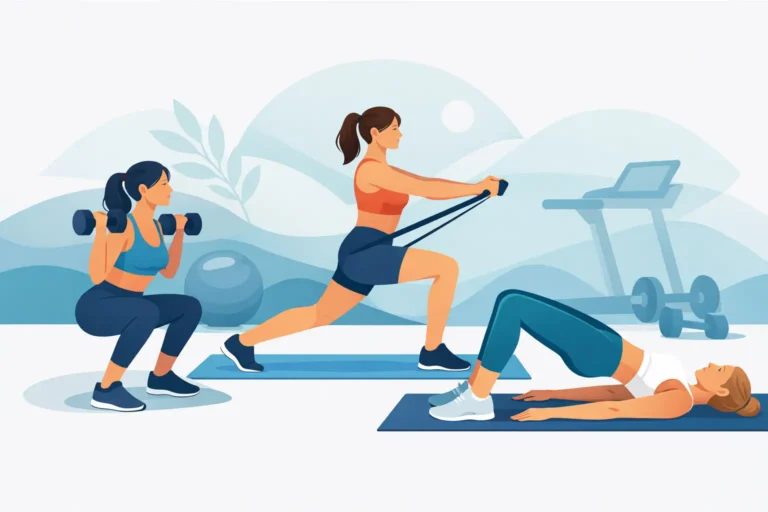
If you're looking for firmer thighs, glutes, arms, and abs, resistance training should be the foundation of your plan. Exercises like squats, lunges, deadlifts (in the right variation), rowing, bench presses, and push and pull movements engage large muscle groups. This strengthens the body as a whole, not just specific areas.
Progression is key. Initially, this may mean learning the correct movement pattern with light weight. Later, heavier weight, more repetitions, a slower tempo, or a more difficult version of the exercise. The body needs a signal to adapt. Performing the same set every week with the same ease will maintain form, but it won't always significantly change it.
Functional training adds value: it teaches you control in movements you perform outside the gym. Descending stairs, carrying groceries, lifting a child, or sitting at a desk for long periods of time no longer pose such a significant burden. This firmness has practical implications.
Pilates Reformer for Deep Tone and Better Posture
The Pilates Reformer doesn't have to replace strength training, but it can be an excellent complement. The springs provide resistance while allowing for precise movement. This makes it easier to feel the work of your core, glutes, the muscles around your shoulder blades, and your legs without accidentally taking over the movement of your neck or lower back.
This is a particularly good choice for people who want to optically slim their figure by improving posture, regain abdominal control after a break in activity, or exercise without aggressive jumping. The reformer teaches quality: pelvic positioning, breathing, rib stabilization, and precise muscle engagement. Such details translate into safer weight training.
However, it's important to keep your expectations realistic. Pilates alone won't always provide the stimulus needed for significant muscle growth, especially if you already have training experience. Many people find the best results when combining one or two Pilates sessions with strength and functional training per week.
Cardio as support, not punishment
Brisk walking, cycling, elliptical training, interval training, or more gentle cardio training can help build fitness, increase daily energy expenditure, and improve recovery. However, you don't have to treat cardio as a punishment for eating or spend hours doing it every day.
If you're just starting out, choose an activity you can enjoy and repeat. For one person, it might be a brisk walk after work, for another, it might be a short interval workout once a week. When toned muscles and a healthy physique are your priorities, cardio should support your plan, not rob you of the energy needed for good strength training.
How to arrange your week to see change?
For most people, a good starting point is three workouts per week. Two strength and function sessions and one Pilates Reformer session create an effective and sustainable rhythm. A more advanced person can add a fourth session—gentle cardio, mobility, or another strength training session.
Don't judge a plan after seven days. The first changes often involve how you feel: climbing stairs is easier, your back feels less sore after work, and your stomach feels more active during exercise. Visual changes usually require several weeks of consistency. Much depends on your starting point, your sleep, stress levels, diet, and whether the workout actually becomes progressively more challenging.
A good week doesn't have to be perfect. If one session falls short, get back into the rhythm at the next opportunity instead of postponing your plan until Monday. Consistency trumps short bursts of motivation.
Technique determines whether training shapes or overloads
A squat performed with your knees rolling inward, a lunge without a stable pelvis, or a plank maintained primarily by neck tension won't achieve the results you're looking for. Instead, they can perpetuate compensations and increase the risk of discomfort. A toned body isn't about "surviving" a workout. It's about ensuring the muscles you're supposed to work actually get the work they need.
This is where the supervision of a trainer and visual guidance of exercises are particularly useful. Screen showing sequence It helps maintain momentum and understanding the task, and the trainer can focus on what technology can't replace: positioning, breathing, range control, and load adjustments. At Velvet Gym, this format allows for small group workouts with greater attention to each participant.
If you experience sharp, radiating, or worsening pain during exercise, don't try to "disturb" it. Pain isn't a measure of effectiveness. It's worth modifying the movement, reducing the load, or consulting a specialist. This is a sensible path to long-term fitness.
Why are abdominal exercises alone not enough?
Hundreds of abdominal crunches won't burn fat locally and won't replace a full-body workout. The abdominals look and function better when they work in conjunction with the diaphragm, pelvis, glutes, and back muscles. Therefore, anti-rotation exercises, supports, controlled limb movements, and working on the reformer can be more effective than chaotic repetitions of classic crunches.
The same applies to the glutes. Activation is important, but a few band movements during a warm-up aren't enough. To improve tone, they require gradually increasing resistance and exercises in different patterns: squats, hip hinges, lunges, and abductions. Variety is essential, but the plan should remain simple enough to measure progress.
The training effect also begins outside the gym
Even the best program doesn't work in isolation from your daily routine. Sleep supports muscle recovery and appetite, adequate protein helps maintain muscle mass, and walking and regular exercise throughout the day increase overall activity without further straining the body.
You don't need a restrictive diet to work on a firmer body. A much better way to eat is one that fuels your workouts and can be sustained for months. When cutting is your goal, a small calorie deficit and adequate protein intake are usually more sensible than drastic restrictions. If you're primarily looking to gain shape and strength, consistent training and adequate recovery will be your priority.
Choose a form of exercise that makes you feel engaged, not pressured. A well-executed workout should strengthen your body, improve your confidence, and provide satisfaction from small progress. These small progresses create a physique that not only looks firmer but also allows you to live more freely and with greater energy.