
Slouching shoulders at the computer, a forward head, stiff hips after a long day of sitting – it's not just a matter of appearance. This position can overload the neck, lumbar spine, and joints. Does a reformer help with posture? Yes, if the training is conducted consciously, regularly, and with your actual movement needs in mind.
Pilates Reformer It doesn't perfectly position your body for you. However, it provides excellent conditions for teaching stability, mobility, and control. These three elements allow you to gradually change the habits that cause your back to round at the desk and your shoulders to roll toward your ears.
Does a reformer help with posture and why?
Good posture isn't about rigidly "pulling your shoulder blades together" and walking with your chest out. It's about the ability to maintain a position that doesn't unnecessarily overload your body—whether standing, walking, lifting groceries, or sitting at a laptop.
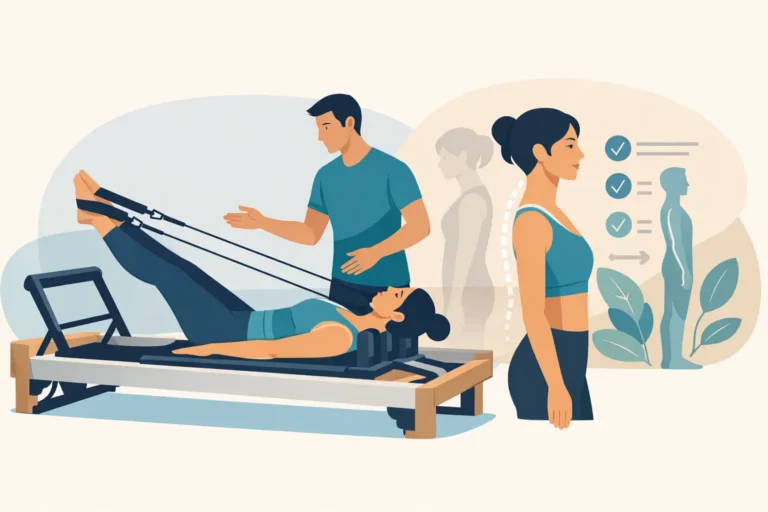
On the reformer, you perform exercises with controlled spring resistance. The cart moves along guides, and you learn to move slowly, maintaining the position of your pelvis, ribs, head, and shoulders. The trainer can quickly observe whether you compensate for the movement neck tension, sinking knees or excessive lumbar arching.
This is important because many people exercise intensely, but repeat the same patterns that cause discomfort. The reformer allows you to slow down and feel where the movement actually begins. It's not about perfection in your first workout. It's about building a better sense of your body that stays with you beyond the gym.
What changes in the body during regular training?
A stronger core, not just a strong stomach„
The deep core muscles help stabilize the spine and pelvis. When they function properly, it's easier to maintain a neutral posture during everyday activities. On the reformer, you work them in motion – while pushing the cart with your legs, working your arms on the straps, or doing kneeling and support exercises.
The effect shouldn't mean constantly tightening your abdominal muscles. Well-executed training teaches you to activate the core when needed and then relax it. This is more functional than repeatedly performing abdominal contractions.
More stable shoulders and a freer neck
With a sedentary lifestyle, the shoulders often shift forward, and the neck muscles take on work they shouldn't be doing. In Pilates Reformer, you strengthen the muscles responsible for stabilizing the shoulder blades while also learning to move the arms without lifting the shoulders.
This can translate into a lighter feeling in the neck and greater control while working at a desk. Not all neck stiffness will disappear immediately – it can be caused by stress, insufficient sleep, or a poorly positioned workstation. However, exercise is a powerful preventative and supportive measure.
Flexible hips, less tension in the lower back
The lumbar spine often "rescues" the movement missing from the hips. If your hips are stiff, you may find yourself arching your back more when bending, climbing stairs, or exercising. The reformer allows you to safely combine glute strengthening with improved hip range of motion.
Springs allow you to adjust the resistance to the level of a beginner, an active person, or someone returning to training after a break. Less resistance doesn't always mean an easier exercise. Sometimes it requires greater control and precision, so the choice of springs is crucial for technique.
Posture also improves between workouts
Two or three sessions per week They can significantly improve strength, mobility, and body awareness. However, they won't replace a full day of movement. If you spend eight hours after training without changing position, your body will still choose the easiest position for itself.
The best results come from combining exercise with a few simple habits. It's worth taking short breaks from sitting, changing your position, walking, and adjusting your screen to a height that doesn't force you to tilt your head. You don't have to maintain perfect posture all day. The body thrives on variety, and posture should be comfortable and efficient above all.
A good sign of progress is when you notice tension in your shoulders or chest sagging more quickly and can calmly adjust your posture. Over time, this adjustment becomes natural, not forced.
When can the effects be particularly felt?
The reformer is a great choice for those who work sedentary jobs, experience back strain, or want to get back into exercise without accidentally overloading their body. It's also a good choice if you're looking for a slimmer physique but don't want to achieve results solely through intense cardio.
Regular practice can also support posture in people who already strength train or run. Pilates doesn't have to compete with other activities. It can complement them with movement control, mobility, and stabilization, which are often lacking in fast-paced, dynamic training.
Seniors can also use the reformer, provided the exercises are appropriately adapted. A small group and attentive guidance are key, as they allow for the pace and range of motion to be tailored to your current fitness level.
When is a reformer alone not enough?
If back pain is severe, radiates to a leg or arm, numbness occurs, weakness occurs, or the problem persists despite rest, you should first consult a doctor or physical therapist. Exercise should not replace diagnosis.
It's also worth keeping your expectations realistic. The reformer won't "straighten" your spine in a few sessions or change your body's anatomy. However, it can increase your strength, range of motion, and awareness, allowing you to move more efficiently and confidently.
The effects depend on regularity, quality of training, starting level, and daily habits. A person starting exercise for the first time may quickly experience relief and improved control. Someone with long-term limitations usually requires more time and cooperation with a physiotherapist.
How to train to support posture?
Initially, technique is key, not the number of repetitions. Tell your trainer where you feel tension, what activities you engage in daily, and if you have any injuries. This will allow them to better tailor the exercises and the resistance of the springs.
At Velvet Gym, small groups allow for space for adjustments and a calm understanding of movement. Instead of trying to keep up with the random pace of the gym, you can work on what matters most for your posture: a stable core, calm breathing, and flexible hips and shoulders that don't take the brunt of the effort.
Give yourself a few weeks of consistent work. Observe not only how you look in the mirror, but also how your back feels after work, how you climb stairs, and whether you can more easily maintain a relaxed, upright position. It's in these daily moments that you can see the training really starting to improve your posture.