
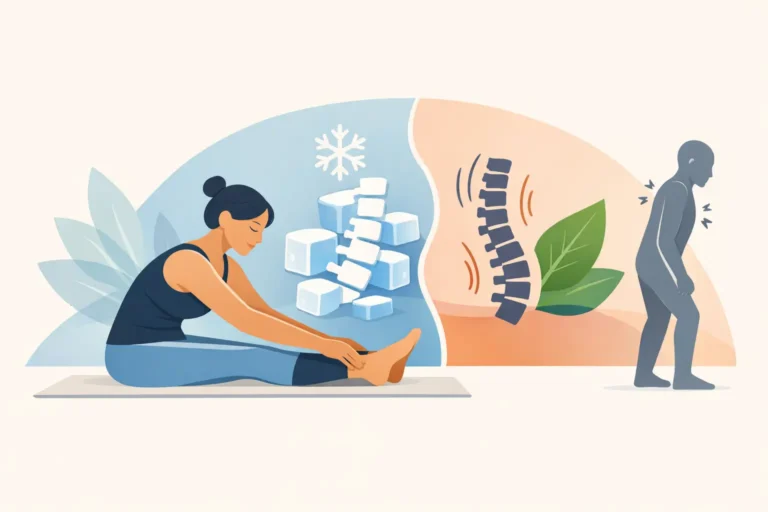
Morning "stirring up," stiff shoulders after working at the computer, limited bending, or a feeling that the back doesn't want to cooperate—these are the signs that many people experience when they arrive at a workout. Does Pilates help with stiffness? Yes, provided it's done consciously, with good technique and regularity. Pilates isn't about aggressive stretching. It teaches the body to move more smoothly, more steadily, and with less tension where tension isn't needed.
Stiffness in itself doesn't always mean a lack of flexibility. It's often the result of prolonged sitting, stress, few posture changes throughout the day, or weakening the muscles that are supposed to stabilize the spine and joints. Therefore, effective work on increasing freedom of movement should combine mobility, strength, breathing, and control. This is precisely what a well-planned Pilates program does.
Does Pilates help with stiffness and why?
Pilates can reduce stiffness because it works on the quality of the entire movement, not just on a single tight muscle. During Pilates, you learn to align your ribs over your pelvis, stabilize your core, and move your shoulder blades and hips in a more controlled manner. As your body regains better organization, it doesn't have to "stiffen up" in advance.
Breathing plays a significant role. Shallow, nervous breathing often goes hand in hand with raised shoulders, a tense neck, and a tense core. In Pilates, exhaling helps activate the deep abdominal muscles, and the calm rhythm of the movement allows you to notice where you're trying to force the exercise rather than precision. For many people, this change alone brings a distinct feeling of lightness to the back and neck.
It's also important to note that Pilates doesn't prioritize flexibility as a goal in itself. You can have a wide range of motion and still feel stiff if you can't control it. On the other hand, someone with limited range of motion can gradually regain flexibility by strengthening their muscles in safe positions. The body is more likely to release tension when it feels stable.
Where does the feeling of a stiff body come from?
Most often, the problem does not stem from a single source. Desk work restricts the movement of the hips and thoracic spine, and the head naturally moves forward. Long car journeys, low phone holding, and evening couch surfing add to the hours spent in a similar position.
Intense workouts performed without recovery are also important. If you run, cycle, or strength train but neglect technique and range of motion, your body may react with overload. Then, another series of random bends or a hard stretch won't necessarily help. You need exercise tailored to what's actually limiting your function.
Stiffness can also be a temporary reaction after a new effort, a sleepless night, or a stressful period. In these situations, gentle training, breathing, and calm mobilization are often a better option than trying to break a record. However, if stiffness is accompanied by severe or worsening pain, numbness, weakness, injury, or fever, consult your doctor or physical therapist first.
How does Pilates work the spine, hips and shoulders?
A well-conducted session doesn't begin with the most difficult poses. It's important to first check your breathing, pelvic alignment, and the ability to move your spine without compensating. Only then should you move on to strengthening exercises and movements that increase range of motion.
Spine: more movement, less strain
In Pilates, the spine works in flexion, extension, rotation, and lateral bending, but always within the limits of its current capabilities. These varied stimuli help regain mobility, especially in the thoracic spine, which is often underactive in sedentary individuals. At the same time, the deep core muscles, glutes, and back muscles are strengthened. The result? The back doesn't have to take on the work that should be distributed throughout the entire body.
Hips: A Range That's Useful for Everyday Use
Stiff hips can manifest themselves not only during squatting. Sometimes they manifest as lower back tightness, a shorter stride, or difficulty rising from a chair comfortably. Pilates uses controlled leg movements, gluteal work, and pelvic stabilization to the hip moved where it should be, without the movement "escaping" to the lower back.
Shoulders and Neck: No More Trap-Only Movement
Many people perform daily movements with their shoulders raised towards their ears. Pilates teaches shoulder blade alignment and strengthens the muscles that support their stability. This makes it easier to reach, carry groceries, work at a desk, or exercise your upper body without unnecessary neck strain.
Pilates Reformer and stiffness: what does the equipment do?
The reformer isn't an "easier version" of an exercise. It's a precision tool that, thanks to springs, can both reduce the load on the movement and gradually make it more difficult. A beginner can more safely work on the range of motion in the hips or shoulders, as the resistance guides the body and provides clear feedback. For the active person, springs offer a way to build strength in a full, controlled range.
Adaptability is key. The same movement can look different for someone who sits most of the day, different for a runner after a strenuous season, and still different for a senior returning to regular activity. Small groups and a trainer's attentiveness allow for the adjustment of the setting, resistance, and pace to ensure the workout is challenging, yet not haphazard.
At Velvet Gym, Pilates Reformer also combines mat work, functional training elements, or barre. This is a great option when you want not only greater comfort in movement but also strength, stable posture, and agility that will be visible beyond the gym.
How often should you exercise to feel the difference?
For most people, a reasonable place to start is two Pilates sessions This frequency allows you to learn new movement patterns while also allowing time for recovery. Some people notice the first changes—easier sitting, looser shoulders, better postural awareness—after just a few workouts. However, more lasting improvement requires regularity.
On rest days, it's worth incorporating short breaks from sitting. They don't have to be long or complicated. A few gentle spinal movements, a walk, a change of position, and a few deep breaths can enhance the training results more than one intense session every two weeks.
Don't compare your range with that of the person next to you. The goal isn't to touch the floor with your hands at all costs. A better indicator of progress is whether you're able to perform daily activities more easily, whether your movements are more confident, and whether you feel a pleasant stimulation instead of strain after your workout.
When might Pilates alone not be enough?
Pilates is a great support, but it doesn't replace a medical diagnosis. After a recent injury, surgery, worsening pain radiating to an arm or leg, or diagnosed conditions requiring treatment, an exercise program should be established with a specialist. Sometimes the best approach is a collaboration between a physiotherapist, doctor, and trainer.
It's also worth taking an honest look at your overall lifestyle. Two good sessions a week won't fully offset the long hours of inactivity, chronic sleep deprivation, and training despite pain. Pilates provides the tools, but daily position changes, regeneration, and reasonable exercise intensity determine how long the results will last.
Stiffness doesn't have to be a permanent part of your routine or the price of a desk job. Start with a workout where someone observes your movement, explains your technique, and selects exercises based on your starting point. The body doesn't need pressure—it needs regular, well-directed movement it can trust.