
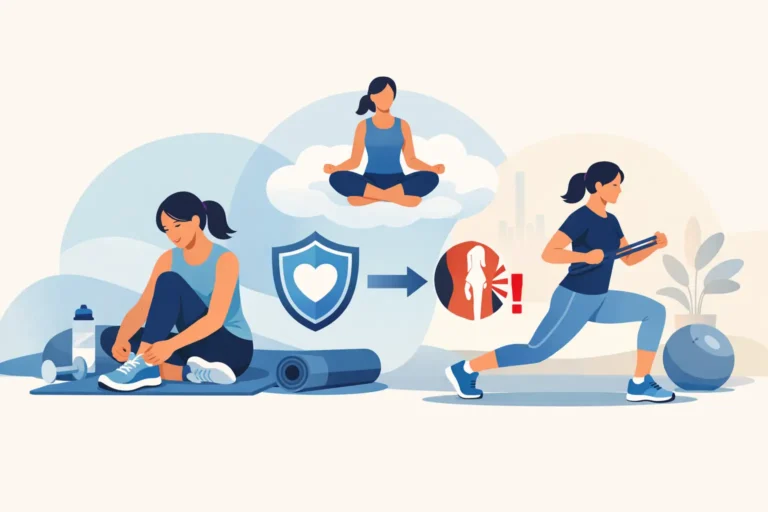
The first workout after a break often begins not with a lack of form, but with the thought, "I used to do more." This comparison can kill your motivation faster than soreness. If you're wondering how to get back into exercise, don't try to recreate a plan from a few months ago. Start by examining what your body needs now: more mobility, strengthening, calmer breathing, or perhaps regained confidence in movement.
Getting back into exercise doesn't have to mean pushing yourself to the limit, running at your limits, or training five times a week. It should give you energy, improve back and hip comfort, strengthen your physique, and build a habit that will stick with you for the long haul. The best plan is the one that makes you want to come back.
How to return to exercise after a break with a clear head
A break from training can last two weeks, six months, or even several years. The reason for the break also matters. A return to training may be different for someone who has had a busy period at work, a mother who has given birth, or someone who has suffered an injury, infection, or prolonged back pain.
Therefore, the first goal shouldn't be to quickly "burn off the lost weight." The body doesn't function like an account where you have to replenish previous months' activity. After a break, the musculoskeletal system, muscles, tendons, and nervous system need time to re-acclimate to the stress. Fitness can return quite quickly, but tissues don't always keep up with the ambition. This is why someone who feels great during their first workout sometimes experiences knee, shoulder, or lower back strain a few days later.
Establish a simple definition of success to start with. For the first three or four weeks, success should be consistency, not calories burned or weight on the bar. Two planned workouts per week is a great start. If you have more time and energy, a third activity could be a walk, a gentle bike ride, or a mobility session.
Evaluate your starting point instead of guessing
Before your first workout, answer a few questions honestly. Do you feel your knees when going down stairs? Do you sit for long periods and have a strained neck? Do you get out of breath after brisk walking? Do you remember the technique for basic exercises like squats, lunges, sit-ups, and deadlifts?
It's not about judging yourself. It's about choosing the right level. Go back to the basics, even if you've trained intensely in the past. Squatting to a comfortable depth, glute strengthening exercises, gentle shoulder movements, and core stabilization are a much better start than a random set you found online.
If you are recovering from an injury, surgery, pregnancy, or a long-term illness, or if you have pain that radiates, wakes you up at night, or worsens with movement, consult your doctor or physical therapist first. Training is meant to support your health, not test your body's limits.
Start with a workout that builds confidence in your body
Many people are prevented from returning to exercise by the fear of not knowing what to do. A crowded gym, complicated machines, and the feeling that everyone is watching don't help. In such situations, choose a form of exercise where technique is observed and the load can be easily adjusted.
Pilates Reformer It's perfect for improving your posture, mobility, and body control after a break. Springs allow you to adjust the resistance to your current abilities, and the exercises teach you to work through a full, yet safe, range of motion. This isn't a light workout just because it looks calm. It precisely engages the core muscles, glutes, legs, and arms, while helping you regain the stability you need for everyday life.
If your goal is greater strength, better fitness and agility, choose strength and functional training In stages. Initially, the load should allow you to perform the movement with complete control. Leave a few repetitions in reserve. You don't have to leave the workout exhausted for it to do a good job.
At Velvet Gym, motion imaging technology helps you visualize the exercise and maintain the correct movement path more easily, allowing the trainer to focus on what's most important: positioning, breathing, technique, and weight selection. This is especially valuable at the beginning, when movement habits are just beginning to return.
Intensity that still leaves you energized
A good indicator of how you feel after training and the next day is how you feel in the first few weeks. You might feel your muscles working, slightly tired, and satisfied. However, you shouldn't feel like you've been "run over." Sharp, stabbing, or worsening pain during exercise is a sign to stop and change the movement.
Don't judge your workout solely on sweat. Sometimes the biggest change is sitting up straighter after hours at your desk, being able to carry groceries upstairs without discomfort, or waking up with less tension in your back. These are the real results of a well-planned recovery.
Plan for the first four weeks
In the first week, plan two 30-45-minute workouts and a small dose of daily exercise. A ten-minute walk after lunch, some morning push-ups, or even climbing the stairs are also important. Your goal is to remind your body that movement is a normal part of the day.
In the second week, maintain two workouts and focus on recovery. Get as much sleep as possible, drink plenty of water, and don't skip meals after exercise. You don't need a restrictive diet. However, it's worth making sure you include foods that provide protein, vegetables, fruits, and carbohydrates throughout the day to replenish your energy.
In the third week, you can add a short third session if you feel good after the first two. This could be Pilates, a lower-intensity full-body workout, or a standalone workout with a simple routine. Don't increase the frequency, time, or weight simultaneously. Choose one element to gradually progress.
Week four is a good time to look for the first signs of progress. Perhaps you're holding a plank easier, feeling your glutes work better, having a greater range of motion in your shoulders, or simply not having to negotiate going to the gym. Then you can increase the load, add a set, or lengthen a single session. Small progress is safer and more effective than a sudden burst.
Don't wait for motivation
Motivation is nice, but it can be unstable. After a hard day, it rarely comes on its own. A simple system works much better: you schedule your workout, prepare your clothes in advance, and choose fixed times that fit your life.
If you work late, a 6 a.m. workout might sound ambitious, but it's not necessarily realistic. On the other hand, someone who finds it most restful in the morning shouldn't expect consistency after evening duties. A plan is meant to support your daily rhythm, not conflict with it.
It's also helpful to shift away from the "full workout or nothing" mentality. When you're short on time, try 20 minutes instead of skipping. When you're feeling low on energy, choose a more relaxed workout. Consistency is built precisely in these moments, not just when everything is going perfectly.
How to know when the pace is right
After a few weeks, pay attention to four things: whether you're exercising without increasing pain, whether you're recovering between sessions, whether your technique remains consistent, and whether your training isn't sapping your energy for normal life. If the answer is yes, you can progress your plan.
If, however, you're missing workouts due to extreme fatigue, constantly feeling tense, or every session ends in pain, reduce your intensity. Sometimes the problem isn't a lack of willpower, but an overly ambitious plan. A wise step back isn't a failure. It's a decision that allows you to train consistently for months, not just for one intense week.
Getting back into exercise starts with a single date on your calendar and a movement that's tailored to you. You don't have to prove your worth. Just give yourself the chance to feel your body regain strength, ease, and confidence week after week.