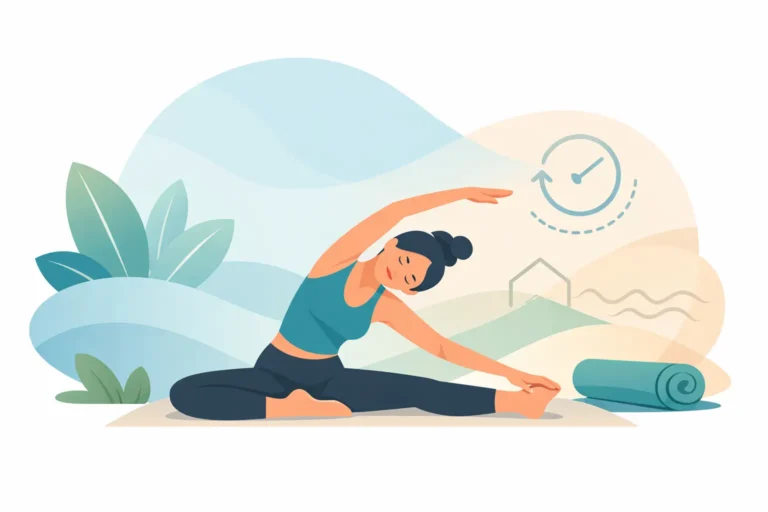
Stiffness when bending down to pick up a bag, limited shoulder movement when reaching for a top shelf, or tight hips after a long day at a desk may not be „normal.”. Exercises for body flexibility They help you regain freedom of movement, but only when performed regularly and with attention to technique. The point isn't to force your hands to touch the floor. The goal is a body that moves confidently, stably, and without unnecessary tension.
Body flexibility is not the same as deep bending
Flexibility refers to the ability of muscles and tissues to lengthen and allow joints to move within an accessible, controlled range. For one person, working on their hips will yield the most improvement, while for another, working on their chest and shoulders will. Therefore, there's no single test to determine whether someone is "flexible enough.".
In practice, what matters is useful range of motion. If you can comfortably crouch, climb stairs, rotate your torso while reversing a car, or lift a child without back pain, your body is functioning properly. Greater mobility is meant to support daily life and training, not be a result for photo purposes.
It's also important to distinguish flexibility from mobility. Flexibility primarily refers to the ability of tissues to stretch. Mobility is the range of motion you can control through strength, stability, and coordination. A person who is highly flexible but unstable doesn't always move safely. Therefore, the best plan combines gentle stretching with active exercises.
What are the benefits of regular body flexibility exercises?
Well-chosen exercises can reduce tension after a sedentary day, improve postural alignment, and facilitate strength training. When the hips, ankles, and thoracic spine have better mobility, it's easier to perform squats, lunges, and deadlifts with technical accuracy.
For many people, the first noticeable effect is back and neck comfort. This doesn't mean that any stretching will solve the pain. If the pain is severe, radiates, numbness develops, or lasts a long time, consultation with a doctor or physiotherapist is necessary. For simple tension resulting from limited exercise, regular exercise often provides significant relief.
Flexibility also supports the quality of your posture. A body that isn't constantly "locked" in tension is easier to maintain, with a more relaxed gait, and better control of the abdomen and glutes. This isn't a shortcut to a slim figure, but a very good foundation for workouts designed to shape it.
First warm up, then stretch
Stretching cold, stiff muscles right after getting out of the car isn't the best idea. Before holding the pose for an extended period, gently raise your core temperature. Five to eight minutes of walking, gentle cycling, arm circles, hip movements, and light squats are all you need.
Dynamic stretching is best before strength or functional training. These are controlled movements, without springing or going to extremes. Leg swings, lunges with trunk rotation, or hip circles prepare the body for exercise rather than putting it to sleep.
Save longer static poses for the end of your workout or a separate recovery session. Hold them for 20-40 seconds, breathe calmly, and don't force your body. A feeling of stretching is fine; stinging, burning, or sharp pain aren't signs of progress.
Six areas worth exploring regularly
Hips and hip flexors
Sitting for a long time shortens hip position for hours. Start by kneeling on one leg: position your pelvis neutrally, slightly tighten the glute of your back leg, and shift your body slightly forward. Don't arch your lower back to "create a wider range." Pelvic control is what determines whether you're working your hips or just overloading your back.
A good complement to this is slow squats, pausing at the bottom in a range you can maintain without lifting your heels. This exercise actively develops mobility while also teaching stable footwork.
Back leg band
Tight thighs often cause the spine to round when bending. Instead of pulling your hands toward your toes, place your heel on a low platform, bend your knee slightly, and lean forward from the hips, keeping your back long. Stop where you can still breathe comfortably.
If you're looking for a real change, add some activity: while lying on your back, raise your straight leg using a towel or band, then try gently pressing your leg down for a few seconds. This tension teaches your nervous system that the new range is safe.
Thoracic spine and rib cage
Rounded shoulders are often not solely due to weak back muscles. A restricted thoracic spine and a tight chest can make it difficult to straighten and breathe freely. While on your knees, perform slow rotations: place one hand behind your head, point your elbow toward the opposite wrist, and then open it upward.
It's also worth stretching your chest against the wall, but without pushing your shoulder too far forward. Position your arm comfortably, gently rotate your torso, and feel the opening in the front of your chest. A small, clean movement is more effective than a forceful jerk.
Barges
A healthy shoulder requires both mobility and stabilization of the scapula. Wall slides performed with the ribs relaxed, without excessive lumbar flexion, are helpful. If the arms don't move high without compensation, this is information, not a reason to force the range.
In training Pilates Reformer The springs allow for graduated resistance and teach movement in a controlled manner. This is especially valuable for those who feel tension in their shoulder girdle but don't want to exercise haphazardly.
Ankles and calves
Limited ankle mobility can make squatting, running, and climbing stairs difficult. Stand facing a wall, place your foot flat on the floor, and slide your knee over your second or third toe without lifting your heel. The movement should be fluid, and your knee should follow a stable path without collapsing inward.
Neck and shoulder blade area
Here, less is more. Instead of intensely pulling your head with your hand, practice gentle side bends, chin tucks, and gentle shoulder circles. Neck tension often decreases only when you improve the alignment of your chest, shoulder blades, and breathing, not by focusing solely on the neck.
How often should you train to see results?
For most people, 10-15 minutes, three or four times a week, is a good start. A short session after work is better than an ambitious, hour-long program performed once every two weeks. After 2-4 weeks, you may notice that your movements are less "rusty," and after a few months of regularity, your range and control will improve significantly.
Don't try to improve everything at once. Choose two or three areas that most limit you on a daily basis. Someone working at a computer might focus on the hips, chest, and thoracic spine. Someone training for running will benefit more from working on the calves, hips, and posterior pelvis.
Why does technique change more than hard stretching?
The most common mistake is to treat discomfort as evidence of effectiveness. The body then reacts with defensive tension, and instead of gaining range, you teach it that a given position is threatening. A better approach is to experience a moderate stretch, breathe evenly, and align precisely.
In small classes, it's easier to notice compensations that you can't see in the mirror: shoulder lifts, pelvic rotation, knee sinking, or lumbar arching. In Velvet Gym, the trainer, supported by visual guidance, can focus on technique correction and selecting the load appropriate to your current fitness level. This is especially important when returning to activity after a break or wanting to combine flexibility with strength building.
Start with a movement that's available to your body today. A few slow, well-executed repetitions and consistency will do more for your flexibility than a one-time attempt at a record-breaking bend.